Health and Safety Policy for Landscaping Soho
 Health and safety is central to every landscaping project in Soho. Our policy sets out the principles, responsibilities and working practices that help protect staff, clients, visitors and members of the public. Because landscaping work can involve tools, machinery, lifting, planting, hard landscaping and work at height, a careful approach is essential. This policy applies to all activities carried out under our landscaping operations, whether the task is routine maintenance, garden construction or seasonal improvement work.
We are committed to creating and maintaining a safe working environment through risk awareness, training, supervision and ongoing review. Every worker is expected to take reasonable care of their own safety and that of others. Supervisors must ensure that planned tasks are assessed before work begins, that hazards are controlled, and that safe systems are followed throughout the job. Safety is not treated as a separate activity; it is part of the way each landscape service is delivered.
The purpose of this policy is to prevent injury, reduce avoidable incidents and promote consistent good practice. It supports a culture where hazards are reported early, concerns are acted upon promptly and lessons are shared across the team. In a busy environment, clear communication and disciplined work methods are especially important because landscaping activities may take place near pedestrians, vehicles, shared access routes or occupied properties.
Responsibilities and Expectations
 Management is responsible for providing suitable equipment, safe working arrangements and appropriate instruction for each task. Risk assessments must be completed for planned works, with particular attention given to manual handling, sharp tools, dust, noise, slips, trips, falls and the handling of soil, stone, timber and other materials. Where necessary, additional controls must be introduced to manage higher-risk jobs. A landscaping supervisor should confirm that the work area is suitable, the task is understood and any special precautions are in place before operations start.
Employees and contractors working on landscaping projects are expected to follow instructions, use equipment correctly and wear the required personal protective equipment. This may include gloves, eye protection, hearing protection, safety footwear and high-visibility clothing, depending on the activity. Workers must not use machinery unless they are trained and authorised to do so. Any unsafe condition, damaged tool or near-miss should be reported immediately so it can be addressed without delay.
Good housekeeping is part of safe practice. Materials should be stored neatly, access routes kept clear, and waste removed regularly to reduce trip hazards. Tools must be inspected before use and maintained according to manufacturer recommendations. Safe landscaping depends on preparation, organisation and attention to detail, not on speed alone.
When work involves public-facing areas, barriers, signage and temporary controls should be used to separate work zones from walkways and occupied spaces. Deliveries, loading and unloading must be planned so they do not create avoidable risks. If weather conditions make work unsafe, such as heavy rain, strong winds or icy surfaces, the task should be paused or adjusted until it can be carried out safely.
Risk Control in Daily Operations
 The main hazards in landscaping can change from one site to another, so controls must be tailored to the task. Manual handling risks should be reduced by using mechanical aids, breaking loads into smaller units and using team lifts where appropriate. Cutting, pruning and digging tasks must be performed with suitable tools in good condition, and operators should maintain a stable stance and safe working distance. Where power tools are used, guards and safety features must remain in place and be checked before starting work.
For more complex landscaping activities, such as excavation, retaining structures or working near slopes, extra care is required. Ground conditions should be assessed before digging begins, and any hidden services, unstable edges or collapse risks must be considered. If a task creates dust or flying debris, additional controls should be introduced to protect workers and others nearby. Protective measures should always be proportionate to the risk but never treated as optional.
Plant, machinery and vehicles must only be operated by competent users. Refuelling and battery charging should take place in designated areas away from ignition sources and public access where possible. Machinery should be isolated before cleaning, adjusting or clearing blockages. Where noise levels are significant, hearing protection must be provided and exposure kept as low as reasonably practicable.
Fire safety and emergency preparedness are also part of this policy. Flammable materials should be stored responsibly, and all workers should know the basic response to a fire, injury or hazardous spill. First aid supplies should be readily available, and incidents should be recorded and reviewed so that the cause can be understood and similar events prevented in future.
Training, Review and Continuous Improvement
We believe that effective training is essential to the success of any landscaping Soho operation. Workers should receive induction training before starting work and task-specific instruction where required. Refresher training may be provided when equipment changes, processes are updated or incident trends show that additional support is needed. Supervisors should encourage questions and confirm understanding before work begins.
Incident reporting is used to strengthen prevention, not to assign blame. Near misses, unsafe acts, hazards and injuries should all be reported so that corrective action can be taken promptly. Regular checks help identify patterns such as repeated trip hazards, equipment wear or recurring control failures. This information is then used to improve working methods and to reinforce good practice across the team.
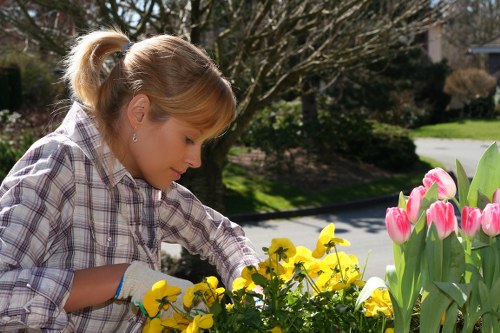 In addition to formal reviews, managers should carry out periodic inspections of tools, storage areas and active work sites. These checks help confirm that the policy remains effective and that standards are being maintained. If a risk is introduced by a new technique, material or seasonal condition, the relevant control measures should be reviewed before work continues.
 This policy is intended to support a safe, professional and responsible approach to landscaping in Soho. By combining planning, training, supervision and respect for safe working methods, we aim to protect people and property while delivering reliable results. Everyone involved in the work has a role to play in maintaining a strong safety culture and ensuring that health and safety remain a daily priority.